


FAO and Ministry of Water Resources Inaugurate Model Projects to Enhance Irrigation Water Use Efficiency
©FAO
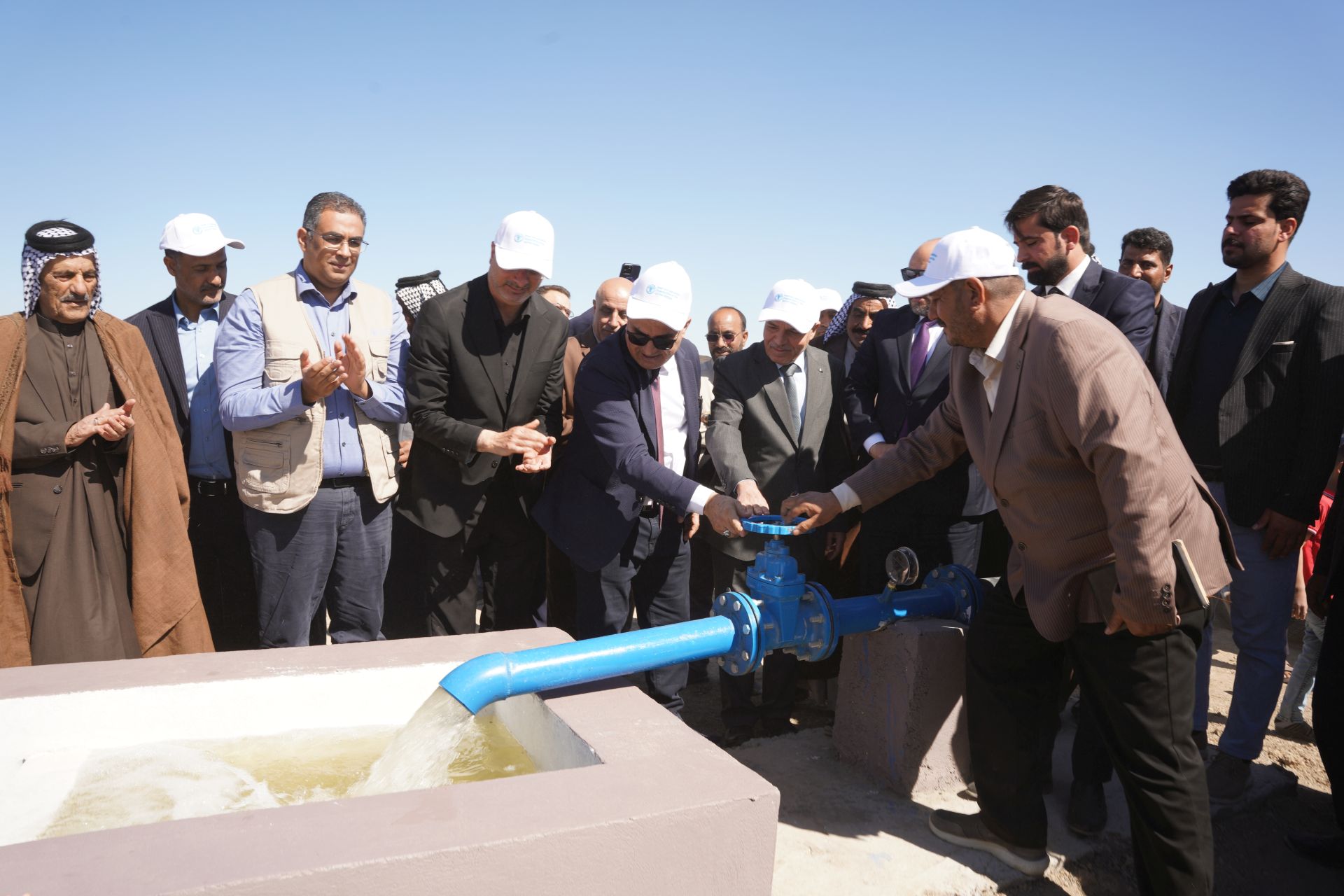
Amid growing climate challenges and increasing water scarcity in Iraq, the Food and Agriculture Organization of the United Nations (FAO) in Iraq, in collaboration with the Ministry of Water Resources and local governments in Muthanna and Najaf governorates, inaugurated model projects aimed at improving irrigation efficiency and promoting sustainable water use.
These initiatives support government efforts to mitigate the impacts of climate change, in coordination with the Ministries of Water Resources, Agriculture, and Environment, and contribute to the sustainable management of natural resources.
The central and southern governorates of Iraq are among the regions most affected by climate change, leading to major challenges such as water scarcity and soil salinization.
FAO’s interventions form part of a comprehensive vision to develop more efficient and climate-resilient irrigation systems. These efforts aim to improve water resources management at the community level, support sustainable agricultural production, and strengthen food security.
Closed Pipe Irrigation System in Muthanna
The first project, located in Hilal District of Muthanna Governorate, involves converting an open irrigation system into a closed and pressurized one along with the installation of a sub-surface drainage network to serve 160 dunums managed by Al-Ghadir Water Users Association (WUA).
The project includes:
- A 110 kW pumping station.
- 4,600 meters of pressurized irrigation pipelines with 21 water intakes.
- A 12,300-meter sub-surface drainage network.
This project enables the association to improve irrigation efficiency, support soil reclamation, and increase agricultural productivity, supporting long-term sustainability.
Rehabilitation of C2-0-1 Irrigation Canal in Najaf
In Abbasiyah district of Najaf Governorate, FAO inaugurated the rehabilitation of the C2-0-1 irrigation canal and its feeder canals R1 and R2, in cooperation with the Directorate of Water Resources in Najaf. The project involved rehabilitating 4,000 meters of canals to serve approximately 2,500 dunums, ensuring improved water supply to reach the more farmers in the targeted area.
The inauguration ceremonies were held in the respective governorates and attended by the Technical Deputy Minister of the Ministry of Water Resources, the Deputy Governor of Muthanna, the Governor of Najaf, the FAO Representative in Iraq, officials from the Ministries of Water Resources and Agriculture, local government representatives, heads of farmers’ associations in Muthanna and Najaf, members of Al-Ghadir WUA,in addition to the FAO Iraq team.
In his opening remarks, the Technical Deputy Minister of the Ministry of Water Resources, Dr. Hussein Baga, said:
"These projects, implemented in collaboration with FAO, aim to enhance water use efficiency and ensure resource sustainability to support farming households and farmers across governorates. They represent a pioneering step in improving water efficiency and mark a qualitative shift in the ministry’s efforts to address water scarcity and climate change, while increasing agricultural productivity for the benefit of farmers, households, and the sustainability of natural resources. We sincerely thank FAO for its efforts."
Local government representatives in Muthanna and Najaf expressed appreciation for FAO’s support, emphasizing the importance of these projects in improving farmers’ conditions and resource sustainability, and expressed interest in expanding them to other areas.
Dr. Salah ElHajj Hassan, FAO Representative in Iraq, stated:
"One of Iraq’s key challenges is climate variability, with water being among the most affected resources. These projects are an important step in improving water use efficiency, enhancing the resilience of farmers and local communities, increasing agricultural productivity, and boosting economic income. We thank the Ministry of Water Resources, water users’ associations, and local governments in the targeted governorates for their outstanding efforts and reaffirm our commitment to partnership with the Government of Iraq and local authorities to strengthen community capacities in facing climate challenges."
These projects serve as practical examples of applying advanced irrigation, water and land management techniques, contributing to improved food security, environmental sustainability, and reflecting FAO’s commitment to support Iraq in effective land and water resources management while building the capacity of agricultural communities to sustainably address climate challenges.