


FAO convenes stakeholders in Cairo to validate prototype regional dashboard on healthy diets and sustainable agrifood systems in NENA
©FAO
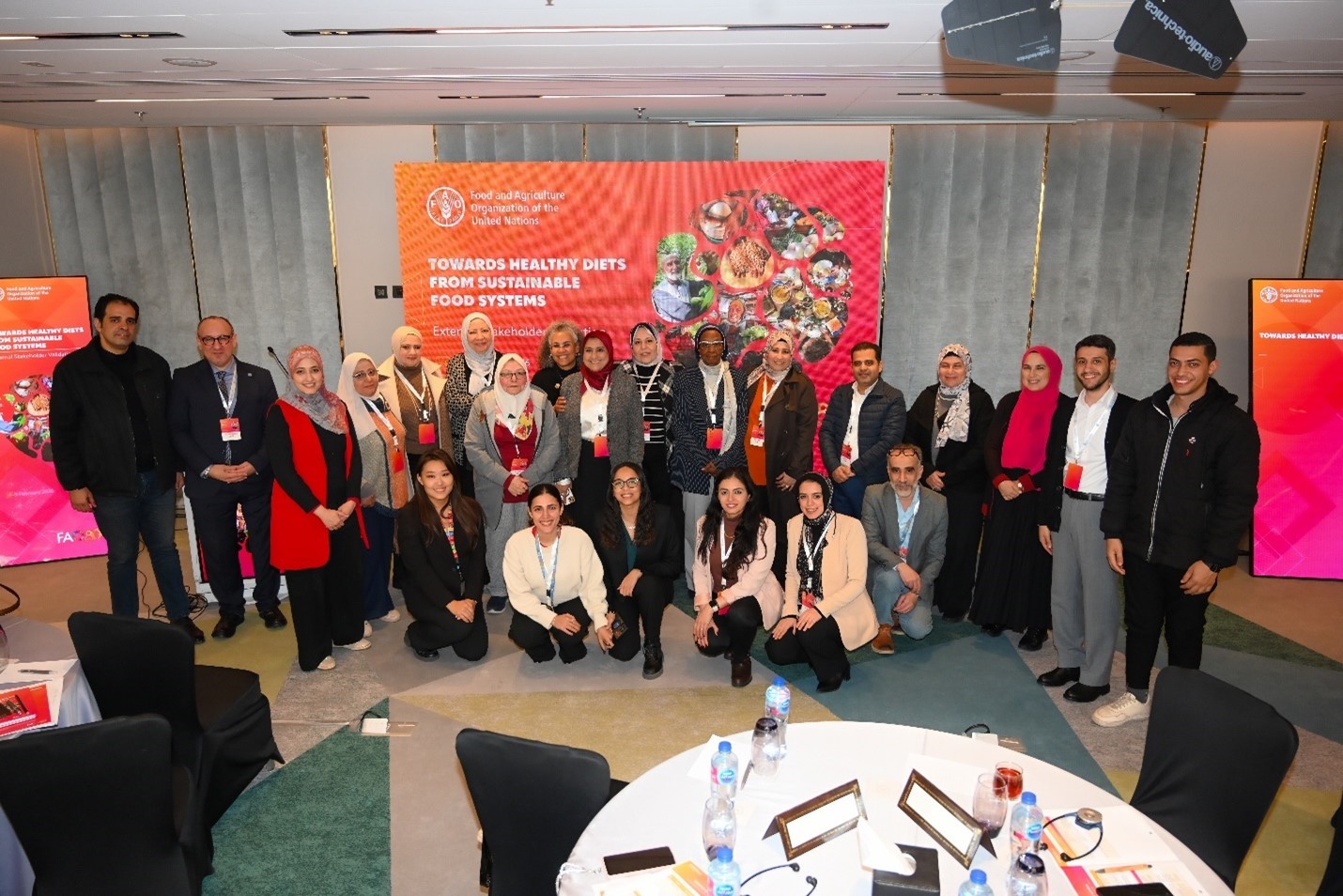
The Food and Agriculture Organization of the United Nations (FAO) convened a two-day Stakeholder Validation Exercise in Cairo on 4-5 February 2026 to review and refine the initial prototype of the regional dashboard “Towards Healthy Diets from Sustainable Agrifood Systems” for the Near East and North Africa (NENA) region.
The event was organized by FAO’s Regional Office for the Near East and North Africa (RNE) under the Game-Changing Initiative, led by AbdulHakim Elwaer, Assistant Director-General and Regional Representative for the Near East and North Africa. The exercise brought together representatives from United Nations Children Fund (UNICEF), World Health Organization (WHO), American University in Cairo, Central Agency for Public Mobilization and Statistics (CAPMAS), National Nutrition Institute and the Ministry of Agriculture and Land Reclamation and Ministry of health and Population of Egypt, and Afroland for Sustainable Development. Representatives from government in the Mashreq region have joined online and contributed to the co-creation and validation process, providing regional perspectives and technical feedback.
Supporting evidence-based policy making on healthy diets in the NENA region
The NENA region continues to face a deepening nutrition and food security crisis, driven by protracted conflict, climate change, economic instability, and increasing inequalities. These pressures are reducing access to affordable, nutritious and safe diets and contributing to the triple burden of malnutrition, including persistent undernutrition, rising overweight and obesity, and widespread micronutrient deficiencies.
To respond to these challenges, FAO RNE is developing the dashboard as a tool to compile, harmonize, and visualize fragmented data on nutrition, health, socio-economic conditions, food environments and agrifood systems. The dashboard aims to strengthen integrated analysis and support more effective policy dialogue across countries, and reveal the hidden health, environmental and economic costs of unhealthy diets.
“The transition toward sustainable healthy diets requires reliable and accessible evidence,” said Moustapha Mohamed, Food Safety and Quality Officer at FAO RNE. “This dashboard is designed to bring scattered data together into a practical tool that can support policy prioritization, cross-sector coordination, evidence-based decision-making, and identify priorities for actions across the region.”
From prototype demonstration to structured validation
The two-day exercise combined technical presentations, a live demonstration of the dashboard prototype, and interactive sessions designed to assess the platform’s relevance, technical robustness, and usability.
Participants reviewed the dashboard’s conceptual framework, indicator clusters, and country profiles, and discussed how well the prototype captures key drivers influencing diet quality, food affordability, and sustainability. Discussions also highlighted the importance of transparent methodologies, improved data availability, and user-friendly visualization to strengthen comparability across countries and support real-world decision-making.
Stakeholders emphasized the need to align indicators with national nutrition strategies, strengthen data governance and validation mechanisms, and ensure interoperability with national and global platforms.
Next steps
The recommendations collected during the validation exercise will directly inform the next phase of refinement, including strengthening the indicator framework, improving the dashboard’s user experience, addressing priority data gaps, and clarifying the roadmap for scale-up at regional and country levels.
In his closing remarks, Ahmad Mukhtar, Senior Economist and Regional Programmatic Leader at FAO RNE, highlighted the value of stakeholder engagement in ensuring the tool responds to country realities.
“This exercise was essential to ensure the dashboard is shaped by regional expertise and practical policy needs,” Mukhtar said. “The feedback gathered over these two days will directly guide the next phase of improvements and strengthen the dashboard’s relevance for supporting evidence-based action on healthy diets across the NENA region.”