


The Kingdom confronts water scarcity with smart irrigation: From challenge to sustainability


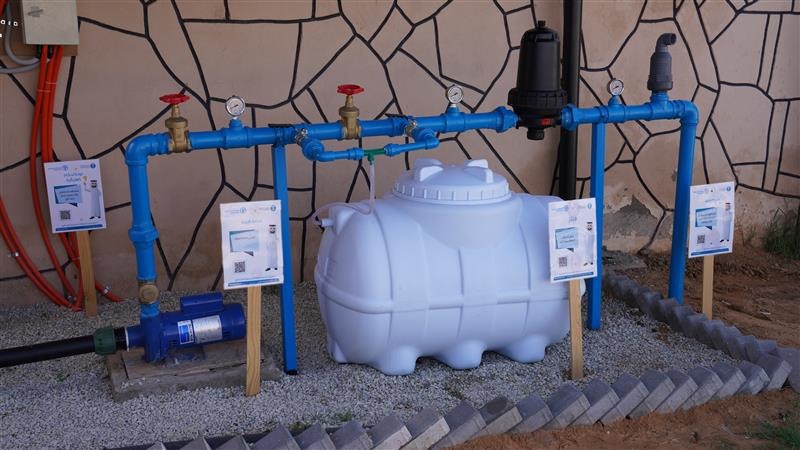
Main unit of the smart irrigation system applied in the project
@FAO/Saud Al Harthi
24/02/2026
Amid its arid desert climate and heavy reliance on non-renewable groundwater aquifers, the Kingdom of Saudi Arabia faces challenges of water scarcity and low irrigation efficiency, which does not exceed around 50% compared to the global average of 85%. These challenges threaten agricultural production and food security, placing improved water management at the heart of Saudi Vision 2030 through clear strategies such as the National Water Strategy and the strategy of the Irrigation Organization.
A pioneering initiative with Food and Agriculture Organization of the United Nations
In response to these challenges, the Saudi Irrigation Organization “SIO”, in collaboration with FAO, launched a national initiative titled “Promoting efficient irrigation and water productivity amongst farmers.” The initiative aims to improve the efficiency of irrigation systems and scale up sustainable practices, while supporting smallholder farmers in building their capacity to use innovative technologies. The main target is to achieve a 20% adoption rate of modern technologies during the first phase.
From planning to implementation and harvesting results
Experts from the SIO and FAO selected 22 demonstration farms out of 320 sites assessed according to strict technical criteria across various regions, including Jazan, the Eastern Province, Madinah, Asir, Al-Baha, Hail, Taif, Qassim, Al-Jouf, and Riyadh. Integrated irrigation systems were installed at these sites, transforming them into farmer-owned, live demonstration hubs open to neighboring farmers to observe tangible, on-the-ground results.
Engaging farmers: From experience to transformation
The initiative adopted a “farmer-to-farmer” approach, selecting and training lead farmers to serve as ambassadors of modern irrigation technologies among their peers. More than 10 knowledge sessions were organized, engaging around 300 farmers in practical, field-based training on the use of smart systems.
To strengthen awareness, guidance manuals, informational signage, and video materials were produced and distributed to farmers, specialists, and relevant stakeholders. This enabled direct beneficiaries to transfer their knowledge to the wider agricultural community and accelerated the pace of change.
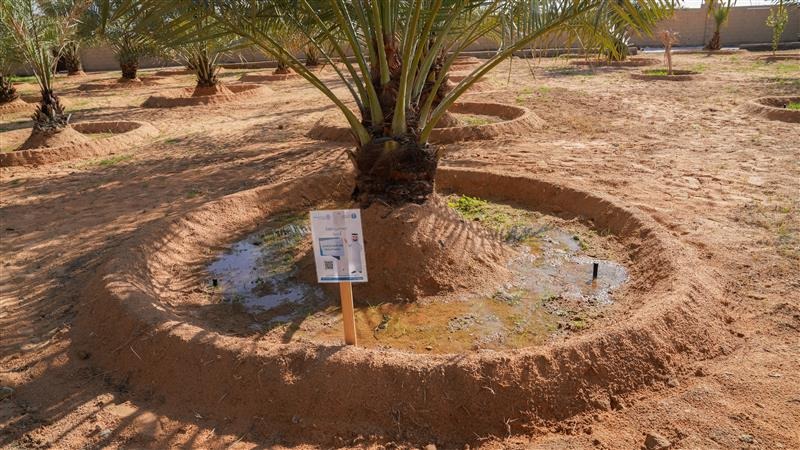
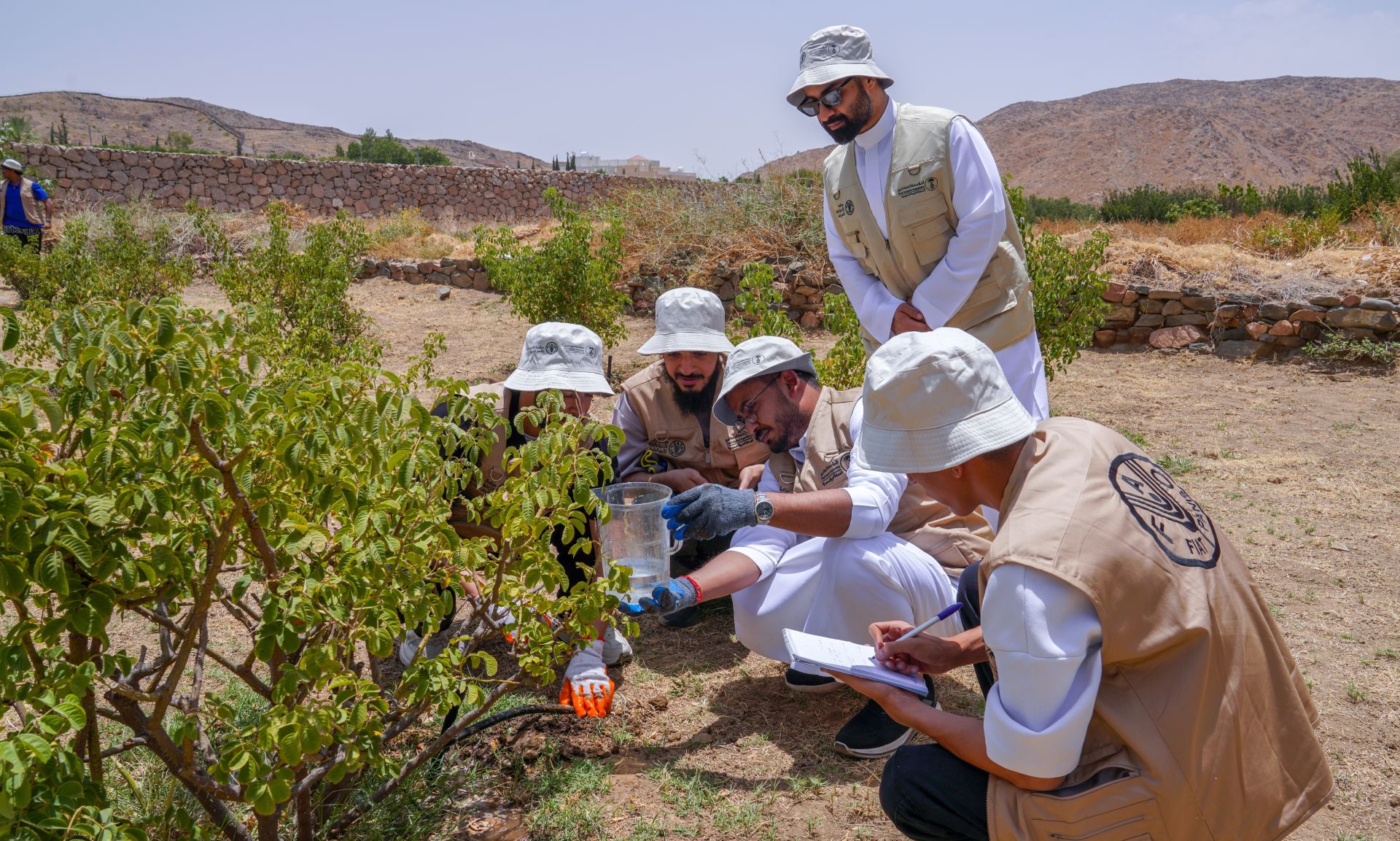
Irrigation of palm basins using bubbling irrigation in the demonstration field in Unaizah. --- Professional training on irrigation system auditing in Taif. @FAO/Eman Soliman
Smart digital solutions
Thanks to the Kingdom’s digital transformation, farmers can now monitor and operate irrigation systems remotely via mobile phones, using digital control units and advanced sensors. This enhances water management efficiency and significantly reduces waste.
Capacity building and ensuring sustainability
The initiative extended beyond technical implementation to focus on national capacity building. Teams of national engineers and agri-entrepreneurs were trained in system installation and maintenance, alongside support provided to agricultural associations and non-profit organizations.
The work supported the process of developing “Code of Irrigation Practices at the Farm Level” as a reference framework to ensure the sustainability of modern practices. The code is expected to be launched in the coming months as a strategic initiative to support the adoption of smart irrigation technologies.
Tangible and rapid impact
As part of evaluating and documenting the initiative’s outcomes, farmers’ experiences revealed notable results:
- In Jazan, water consumption in mango farms decreased by 19%.
- In Al-Baha, greenhouse farms saved approximately 24% of water.
- In Al-Ahsa, profitability from improved date quality increased by more than 200% in demonstration fields.
Overall irrigation efficiency rose from 50% to over 92%.
Voices from the “heart” of the farms
Hammoud Al-Otaibi, Irrigation Ambassador from Unaizah in Qassim;“I reduced water consumption and saved energy thanks to smart irrigation, and the quality of my dates improved.”
Sarah Al-Maliki, Change Leader from the mountains of Al-Dayer in Jazan; “The modern system helped revive my coffee cultivation, and I hope the experience expands further.”
Abdullah Al-Shalhout, Influential Farmer from Al-Muwawin in Asir; “The automated system reduced water consumption by 40% and produced high-quality grapes.”
The road toward a more sustainable agricultural future
Today, as the initiative approaches its conclusion, the Kingdom is closer than ever to reaping long-term benefits from these efforts. The new practices not only enhance agricultural productivity but also ensure optimal use of scarce water resources—placing Saudi Arabia firmly on track to achieve its national development goals and Vision 2030 ambitions.