


The story of Ali Al-Jarbou from Abha: From traditional irrigation to smart leadership
The Whisper of the First Fruit


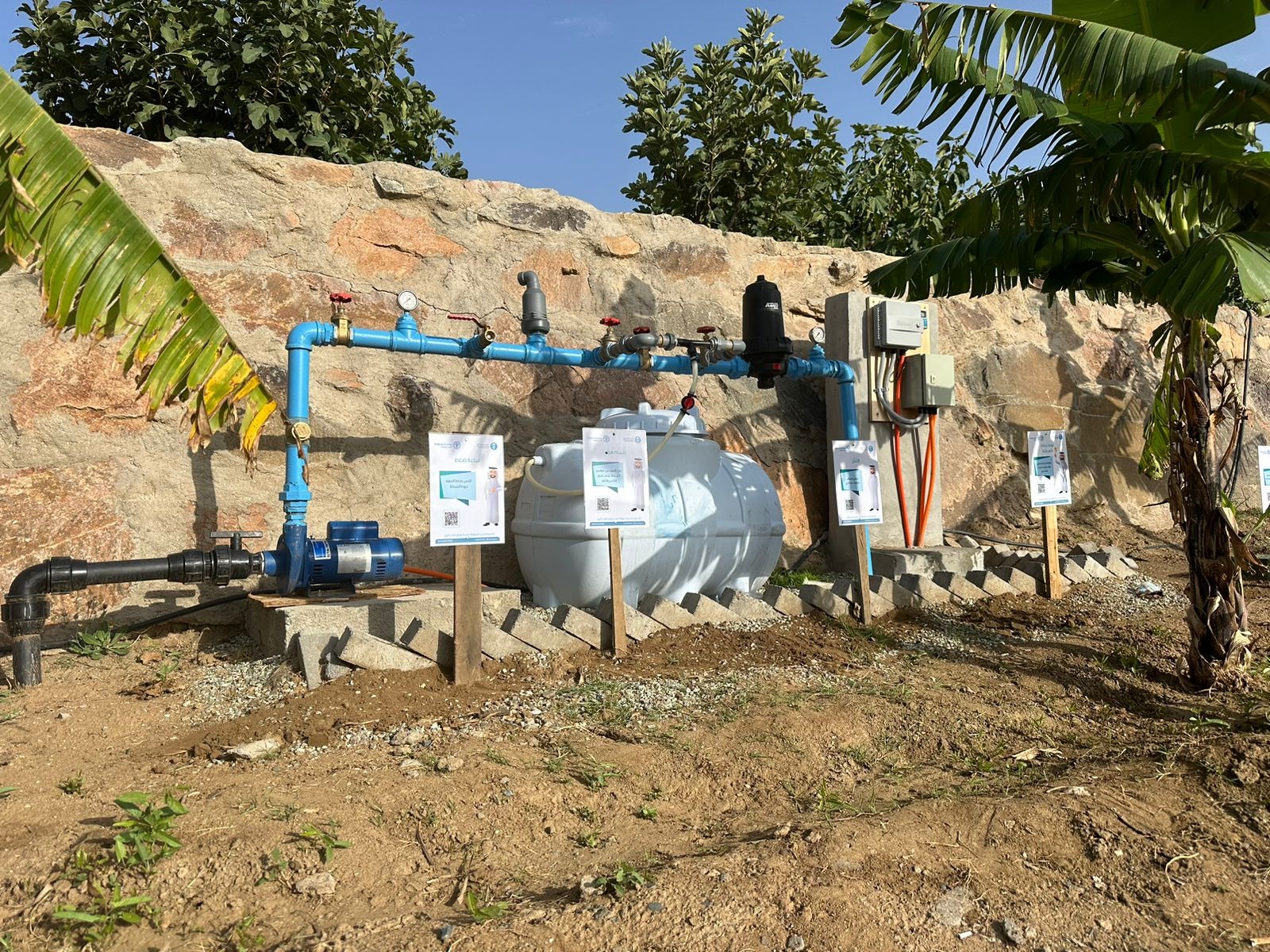
Main control unit of the Modern Irrigation System Applied in the Pomegranate Field in Abha
@FAO / Eman Soliman
24/02/2026
The Whisper of the First Fruit
On a mist-tinged morning, as Abha seemed to breathe in its ancient memory, Ali Al-Jarbou stood among rows of pomegranate trees. The trees, long accustomed to silence, appeared to guard the secrets of the soil within their roots. Between branches that had once been as fragile as an unwritten wish, a single fruit emerged, hanging shyly—like something stepping out of long solitude, carrying behind it a story of waiting.
He approached it, reached out, and touched it the way one touches a dream that has slowly taken shape in the heart with unseen patience. Five years of traditional irrigation. Five years of constant worry. Blossoms falling like small disappointments. Efforts that did not yield as they should. And now, the land was answering him—not with words, but with fruit.
“I felt as though the tree was whispering to me: you finally understood me,” Ali says, his eyes gleaming with something akin to gratitude.
That moment marked the beginning of transformation—not only in the farm, but within Ali himself. The fruit was not merely a result; it was testimony to a new understanding and to a deeper relationship between human and earth.
The Beginning: Land That Called and Was Unanswered
Before that promising fruit hung from the branch, the farm did produce—yes—but modestly, as though the land was giving shyly. Twenty-five dunums of pomegranate orchards struggled under traditional irrigation, irregular watering schedules, erratic rainfall, and electricity costs that strained the budget.
Blossoms would fall before fulfilling their promise. Rain arrived when least expected and vanished when most needed, as if testing the patience of both land and farmer. Production existed, but it did not match ambition or effort. It was as though the soil told only half the story, concealing the rest.
Although Ali, an influencer on Snapchat, regularly shared advice on spraying, fertilization, and farm operations with fellow farmers, and posted vibrant images online, behind the screen there were trees hiding more than they revealed—roots speaking a language not captured in posts but understood in quiet moments between him and the earth.
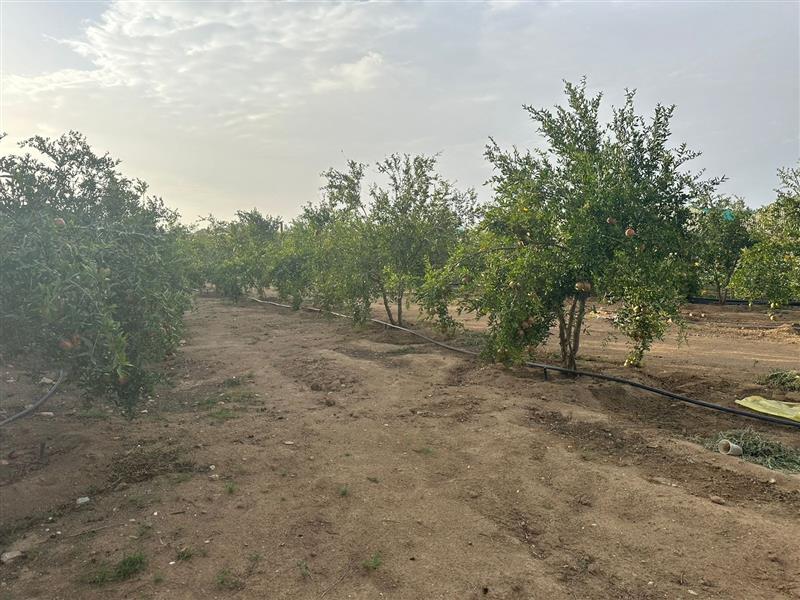
Demonstration Pomegranate Field in Abha. @FAO / Eman Soliman
When Hope Knocked on the Door of the Soil
One day, a team from the Food and Agriculture Organization of the United Nations (FAO) and the Saudi Irrigation organization (SIO) visited Ali’s farm. It was not merely a formal visit, but a sincere encounter reflecting genuine concern for the farmer’s reality. They walked through the fields, examined the soil carefully, asked about weather conditions, and listened closely to irrigation details—reading in Ali’s eyes both the fatigue of past seasons and the hope for future ones.
From that meeting, a plan began to take shape—not as ready-made solutions, but as precise responses to the land’s needs and the farmer’s voice. Through the ““Promoting efficient irrigation and water productivity amongst farmers” project, modern irrigation networks were proposed to enhance water distribution and reduce waste. Filters were introduced to remove salt and impurities that damage the network. Precise irrigation scheduling aligned with changing weather conditions was recommended, supported by digital tools enabling Ali to monitor his farm remotely in real time. Practical guidance on fertilization and pest management was also provided—simple, applied, and respectful of his experience.
This was not just a technical upgrade. It was a redefinition of farming—where knowledge becomes part of daily life, and the land transforms from a production space into a living partner in growth. With FAO’s intervention and the support of SIO, Ali felt his farm was beginning a new chapter—more aware, more resilient, and more confident in facing challenges.
From Traditional Irrigation to the Wisdom of Drops
Ali began cautiously. In the early days, he observed every detail carefully adjusting here, noting there, recording observations as if rediscovering his farm anew. Gradually, the land began revealing what it had once concealed: blossoms became steadier, leaves deeper green, stems stronger, and the orchard more radiant than ever before.
He realized the trees were no longer mere plants to be watered—they were living beings with individuality, needs, moods, and timing. He began treating each tree like a family member, listening and respecting its differences.
“I never imagined that a small change in water quantity could so dramatically alter the tree’s shape and fruit size. Every day I discover something new about my trees,” he says.
The training he received was hands-on and practical. He learned to manage energy intelligently, replacing traditional pumps with a remotely operated smart system that reduced electricity consumption by more than 50%, saving both time and effort once spent on routine tasks.
It was more than technical improvement; it was a journey of learning and rebuilding the relationship between human and land.
When the Farmer Became a Mirror for Others
Over the months, the farm’s results spoke for themselves. The trees grew healthier, blossoms became more stable, and pomegranates fuller. But Ali did not keep success to himself. He began organizing workshops at his farm, inviting senior pomegranate farmers, sharing his experience, guiding them, and encouraging experimentation.
Ali’s farm had never been limited to pomegranates. It was a vibrant garden hosting grape, strawberries, almonds, and even dragon fruit—drawing farmers, influencers, and tourists alike in search of a complete agricultural and leisure experience.
What gave it renewed character was Ali’s documentation of his pomegranate journey on Snapchat. He recorded changes, explained techniques, and showcased results until the farm became a living model—an inspiration to followers and a convincing example to visitors. With every story shared, visitor numbers grew—not merely to observe, but to learn and engage.
“What I learned is not just a technique—it’s a way of life. I learned how to protect my farm and resources, and how to transfer knowledge so others can improve their lives too.”
Among those influenced by his experience was a Kuwaiti social media influencer who attended one of the workshops, expressed admiration for the applied techniques, and later shared the experience with the Kuwaiti community—affirming that what he witnessed at Ali’s farm could make a real difference in traditional farming practices.
These workshops were not mere gatherings, but stations for knowledge exchange—where experienced pomegranate farmers saw firsthand how modern technologies could reshape agriculture and redefine the relationship between human and land.
When Knowledge Bears Fruit and Life Blossoms
Ali Al-Jarbou’s story is not merely about pomegranates—it is about a person who rises from challenges and rearranges his dreams through knowledge. A farmer who not only cultivated the land, but planted hope in every corner of his farm, irrigating his dream with experimentation, observation, and determination.
Today, his farm is no longer just a production site—it is an educational environment, a source of inspiration, and a living model of development. Ali expresses deep gratitude for the continuous support, advice, and follow-up provided by FAO and SIO.
“I no longer see myself as just a farmer,” he says. “I see myself as a bridge between knowledge and application, between expertise and practice. I am grateful to FAO and SIO —without them, I would not have seen the pomegranate trees come back to life.”
Thus, Ali Al-Jarbou has become more than a farm owner—he has become a voice for smart agriculture, describing himself as an ambassador of a new mindset that redefines the relationship between human and land. He has proven that when technology is planted in the soil, it yields not only crops, but a more conscious, sustainable, and hopeful life.