


IYWF: In Oman, women are turning camel milk into opportunity


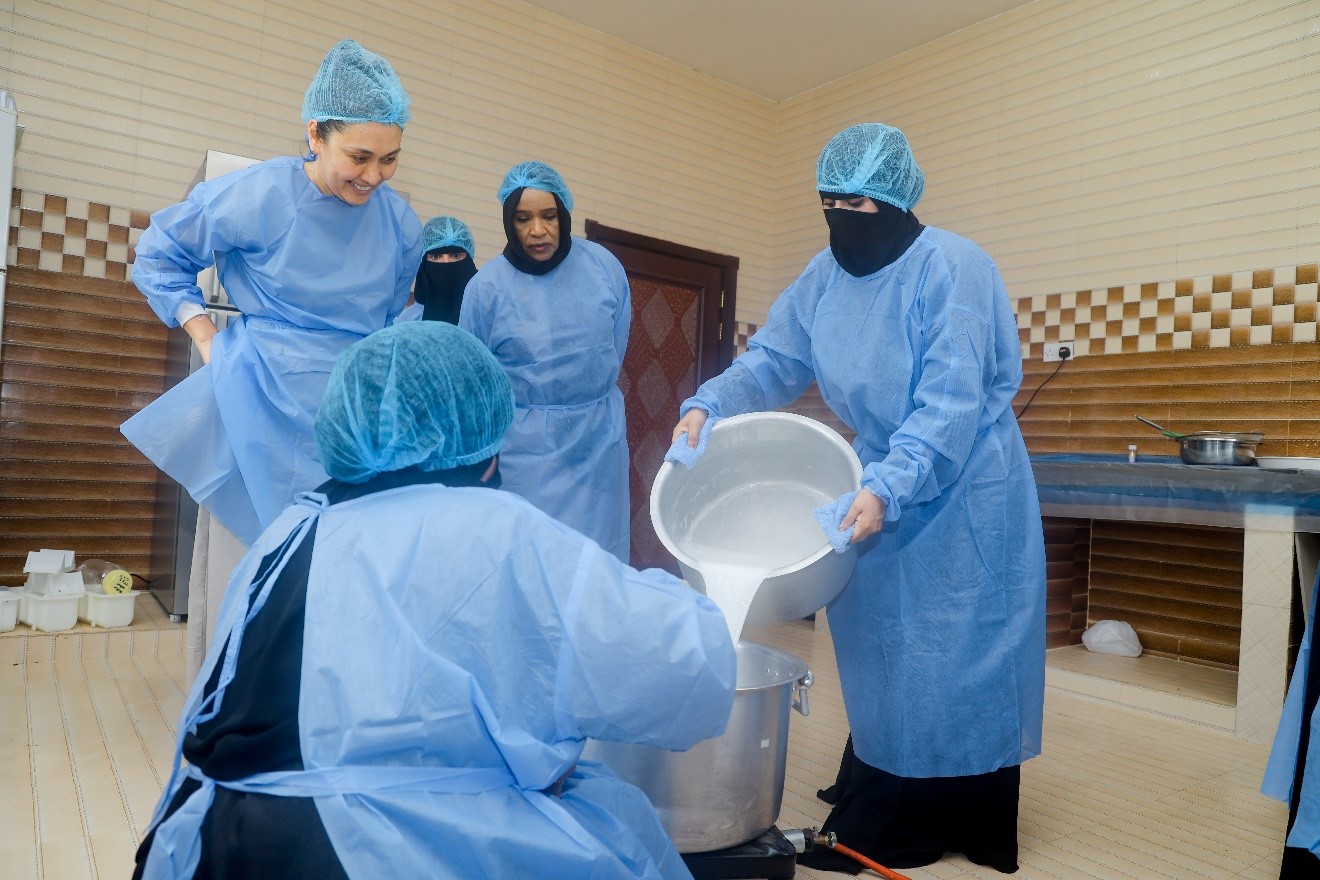
1Camel Milk Cheese and By-products Technical Processing Training conducted by FAO for targeted women producers in Rakhyut, Dhofar – July 2024.
@FAO
12/02/2026
From heritage to opportunity in Rakhyut
In the coastal landscapes of Rakhyut in Oman’s Dhofar Governorate, camels have long been part of everyday life. They represent heritage, resilience, and a vital source of food and income for rural households. Today, camel milk is also becoming something more. Through an initiative supported by the Food and Agriculture Organization of the United Nations (FAO), it is turning into a pathway for women to step into new roles as skilled processors, entrepreneurs and leaders in a growing value chain.
The camel milk initiative in Rakhyut, Dhofar, provides a compelling example of how targeted interventions can strengthen the visibility, skills, and economic participation of women farmers, which are core priorities of the International Year of the Woman Farmer (IYWF) 2026. By supporting the development of Oman’s first camel milk cheese processing unit, now 99 percent of needed construction is complete as of 29 January 2026, the project is advancing rural income generation and local value addition, with women at the center.
Building Oman’s first camel milk cheese processing unit
FAO, in collaboration with Oman’s Ministry of Agriculture, Fisheries and Water Resources, and with support from Al Jisr Foundation and Petroleum Development Oman is implementing a five year project (2021 -2026) to strengthen the camel milk and by-products value chain in the State of Rakhyut. A major milestone is the development of Oman’s first specialized camel milk cheese processing unit, designed to meet environmental health standards and unlock local value addition in one of the country’s most culturally significant and economically promising sectors. The facility is expected to serve as a foundation for a more inclusive and sustainable camel dairy industry, where rural women are positioned at the center of production and innovation.
At the heart of this initiative is a group of 20 women producers, identified through the Omani Women Association in Shahb Asaib, Rakhyut, and selected as the core focus group for long-term capacity development plan. The aim is clear: to ensure women are equipped with the technical, organizational, and business skills needed to move beyond primary production and into higher value roles within the camel milk economy.
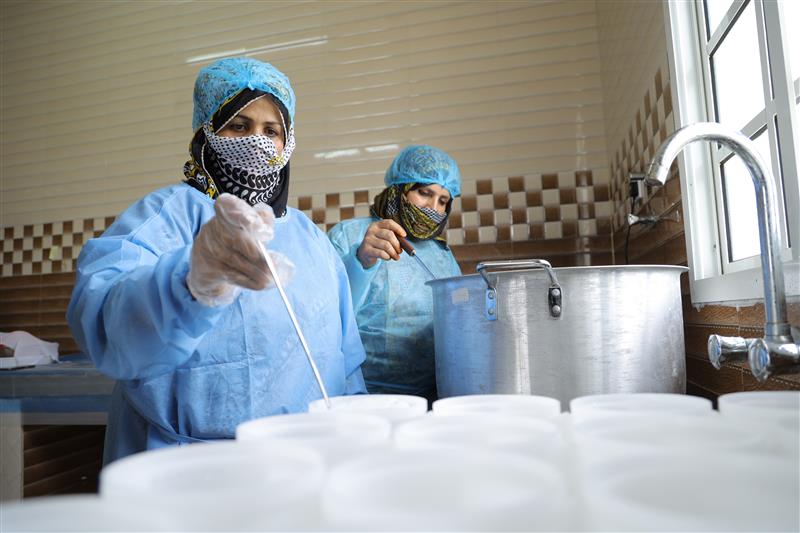
Target Omani women participating in the FAO Technical Training on Camel Milk and Cheese Processing, Dhofar Governorate – July 2024
Practical skills that open new doors
Following the first camel milk processing training delivered in 2022, this shift became tangible in July 2024, when FAO delivered a practical technical training on camel milk processing and cheese-making for the selected women in Shahb Asaib. The training ran from 14 to 19 July 2024 and focused on hands-on learning that directly responded to the realities of local production. Women learned to produce multiple camel milk products, including cheese varieties and milk-based products such as condensed and sweetened condensed milk. For many participants, the training marked a turning point. It demonstrated that rural women could transition from being raw milk suppliers to becoming skilled processors capable of producing higher-value products with market potential.
Amira Ahmed, one of the participants of the training said, “for years, we only knew camel milk as something we sold in its raw form. Now we know how to transform it into products we can be proud of. This gives us confidence, and it gives our families new opportunities.”
Since then, the women have continued to build their capabilities and confidence, and they now produce five types of cheese and two milk products. The initiative has also supported women through complementary training on organizational development, management, financial literacy, marketing, and e-commerce, which are key areas for ensuring that technical skills translate into sustainable income. Additional training is planned for 2026 once the processing unit becomes fully operational. The training will introduce new cheese varieties developed using the cave‑maturation environment, strengthen quality control and hygiene practices, and familiarize the women with operating, testing, and maintaining the full range of processing equipment.
A strong IYWF 2026 story of women’s leadership
The IYWF calls for a shift in how women’s roles in agriculture are viewed globally. Women farmers should be recognized not simply as labourers or beneficiaries of rural programmes, but as innovators, knowledge holders, and economic actors across agrifood systems. The camel milk initiative in Oman reflects that shift through direct action. It strengthens women’s technical capacity, increases visibility of their contributions in a culturally significant value chain, and promotes diversification of women’s roles from producers to processors, marketers and decision-makers. It also highlights the lived experiences of women in pastoral, remote and coastal settings, groups that are often underrepresented in agricultural policy dialogue and national market development strategies.
Beyond training, the project is designed as a full value chain intervention. It includes market assessments, feasibility studies, and is supporting the development of a milk collection scheme and network that will integrate more farmers into the system once the facility is operational. It is also advancing brand and market development, with an Omani brand for camel by-products already 80 percent developed and expected to launch in 2026. Partnerships and co-financing commitments have strengthened the project’s sustainability, including support for equipment procurement and technical and administrative backing.
The impact of this initiative extends beyond the product themselves. It reflects what becomes possible when women gain access to technical knowledge, market opportunities and practical skills. It also shows how investment in women’s capacity can strengthen local economies, improve livelihoods, contribute to inclusive rural transformation. As Oman’s first specialized camel cheese processing unit moves closer to completion and women-led camel milk products move closer to market, the initiative stands out as a story that deserves global attention during the IYWF. It is measurable, rooted in long-term partnership, and grounded in the real progress of rural women building skills, confidence and leadership
In Rakhyut, women are not being added to the value chain. They are shaping it.